


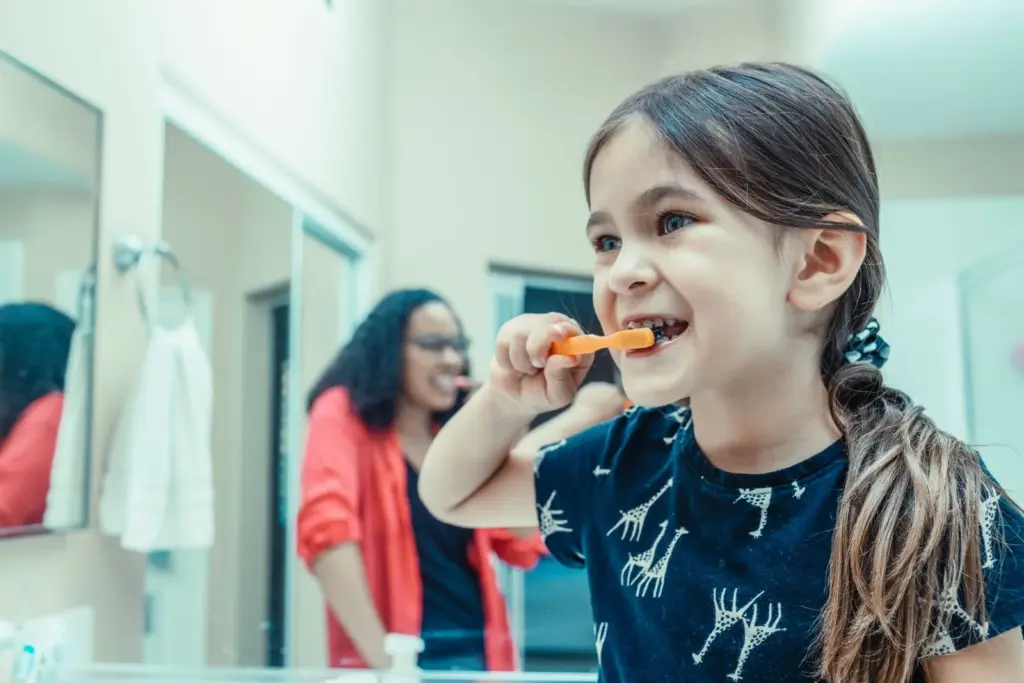
Booking an appointment for your child
Describe the problem briefly on the phone and we will decide together whether your child should be seen the same day. Telling us the age of the child, when the complaint started and whether they have visited a dentist before helps us plan the appointment properly. Our clinic is in the Oba district of Alanya and we are open on weekdays from 09:00 to 18:30 and on Saturdays from 09:00 to 15:00.
The questions parents ask most often
Below are the subjects we deal with most in children’s dentistry. Each item links to the page where we cover it in detail.
- What pediatric dentistry covers, and which age group it serves
- When the first dental check-up should be, and what that visit is for
- Toothache in children, and which pain should not wait until morning
- A baby tooth lost too early, and how it affects the permanent tooth
- Teeth grinding in children, and when a night guard is needed
- How sugar affects dental health, the main reason behind decay
- Preventive treatments for children, fluoride and fissure sealants
- Orthodontic treatment in children, following bite problems early
Your child’s first visit to the dentist
When the first check-up should happen
We recommend a first check-up after the first baby tooth appears, roughly between six months and one year of age. The purpose of that visit is not treatment but getting to know each other. The child sees the chair, the mirror and the light without any pressure, while we assess the gums and the teeth that have come through. Children who meet the clinic early are noticeably calmer at later appointments.
How to prepare for the appointment
Explaining what will happen in simple words works better than promising that nothing will be felt. Try not to book the appointment over nap or meal times, because a tired and hungry child finds it hard to cooperate. It also helps if unpleasant memories of your own dental visits are not discussed in front of the child.
How often check-ups are repeated
We recommend a check-up every six months even when there is no complaint, because decay progresses quickly in children and a cavity caught early is solved with a much smaller procedure. Everything we do for children is collected in our pediatric dentistry and pedodontics section.
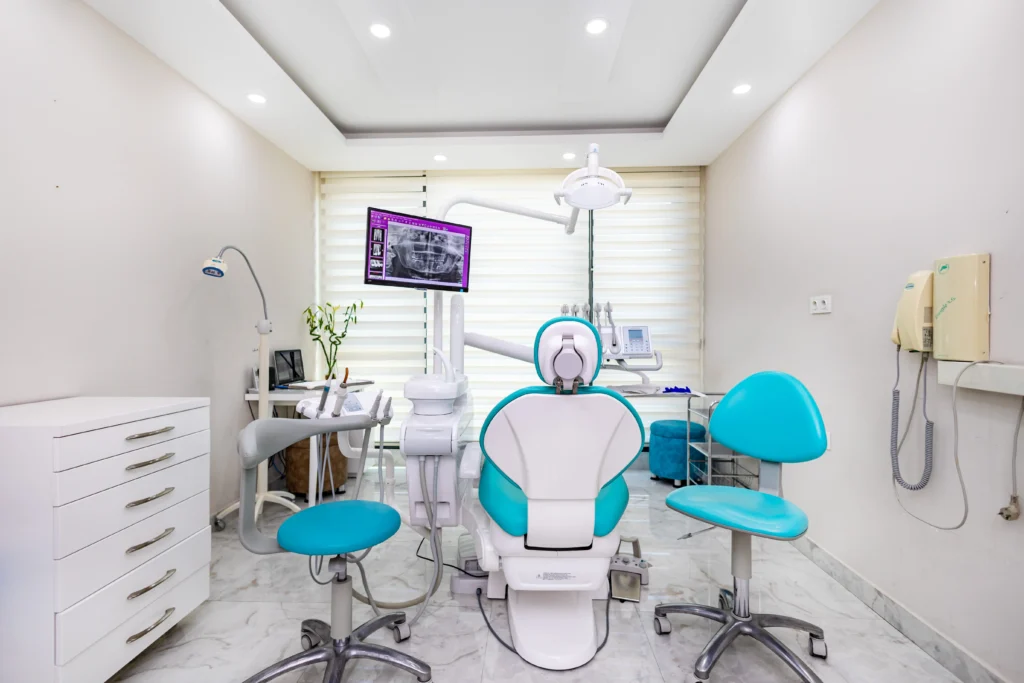
Children’s treatments we provide at the clinic
Preventive care
Fluoride application and fissure sealants protect the chewing surface and the enamel before decay begins. Combined with regular check-ups they reduce the number of cavities. Both are short procedures and are not uncomfortable for the child.
Restorative treatment
When decay has progressed a filling is placed, and when it has reached the nerve a root canal treatment designed for baby teeth is carried out. If a tooth cannot be saved, extraction in children is considered, and the gap that is left behind has to be protected.
Space maintainers and orthodontic assessment
When a baby tooth is lost too early the neighbouring teeth drift into the gap and the permanent tooth has no room to come through. A space maintainer prevents this. If jaw growth and the bite relationship are assessed around the age of seven, any correction that is needed can be made with a far simpler method.
Children who find treatment difficult
With very young children, or children who cannot stay calm throughout a procedure, treatment is divided into short sessions. When that is not enough and several teeth have to be treated at once, pediatric dental surgery is discussed with the family and carried out only with their consent.
Emergency dental care for children in Alanya
Injuries after a fall or a knock
A knock during play, at the poolside or off a bicycle is the most common reason children need to be seen urgently. A permanent tooth that has been knocked out completely must not be allowed to dry out, so keep it in milk or saline and bring it to the clinic as quickly as possible. We describe every step in our articles on dental trauma in children and first aid for a broken tooth.
Swelling, fever and pain that keeps a child awake
Swelling of the cheek, fever and pain that increases at night can mean that an infection is spreading. In that situation an appointment on the same day is needed rather than waiting with painkillers. Please do not start antibiotics without asking a dentist, because medication taken before the cause is found masks the signs and delays diagnosis.
Problems that start outside working hours
Pressing a clean gauze on the bleeding and applying something cold to the outside of the cheek is the first step in most cases. If the problem starts in the evening or on a Sunday, our page on emergency pediatric dentistry explains what you can do until you reach the clinic.
Meet Our Dentists

Ayşe Erken
Dentist

Burcu Uslu
Specialist Orthodontist

Olgu Alperat Kılıç
Specialist in Periodontology
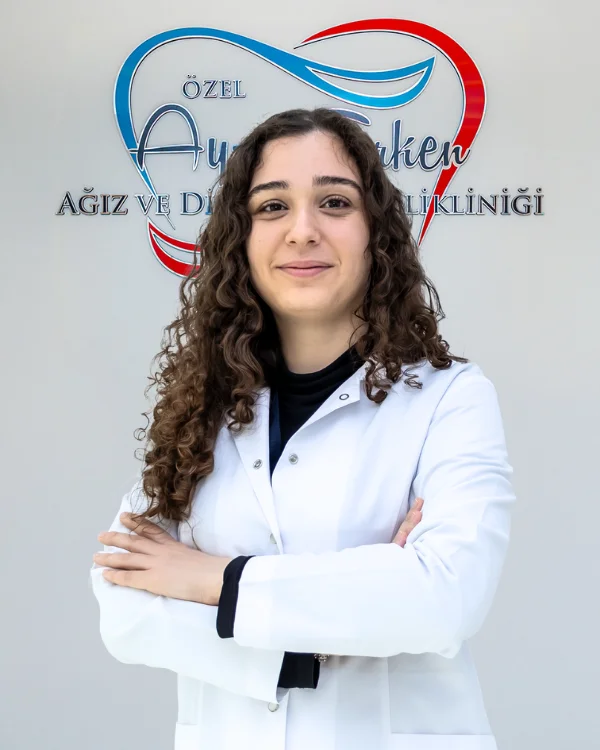
Seren Dik
Dentist
How to reach our clinic
Address
Oba Mah. Fabrika Cad. Ahmet Güvercin Apt. No:11 Kat:2/4
07400 Alanya / Antalya
Opening hours
- Monday to Friday: 09:00 – 18:30
- Saturday: 09:00 – 15:00
- Sunday: Closed
You can see all of our treatment areas in Alanya on our dentist in Alanya page.
+90 532 727 29 92 WhatsAppGetting here from other parts of Alanya
Our clinic is in the Oba neighbourhood, on Fabrika Caddesi. Approximate driving times:
- Oba0-5 minutes
- Alanya centre10-15 minutes
- Tosmur5-10 minutes
- Kestel15 minutes
- Cikcilli10 minutes
- Mahmutlar20-25 minutes
- Gazipaşa-Alanya Airport37.4 km
- Antalya Airport130 km
⭐Our Google Reviews⭐


Frequently asked questions
We recommend a check-up after the first baby tooth appears, roughly between six months and one year of age. The purpose of that appointment is not treatment but getting to know each other. The child meets the clinic and the team in a calm setting while we assess the gums and the teeth that have come through.
A baby tooth holds the place of the permanent tooth and takes part in the development of chewing and speech. Untreated decay can lead to pain, infection and damage to the permanent tooth bud underneath. Decay in baby teeth is therefore treated in the same way.
Booking the first appointment while there is no complaint helps a great deal, because a child who comes without pain has the chance to get used to the setting. Explain what will happen in simple words beforehand and avoid absolute promises. Where necessary we divide treatment into short sessions.
An X-ray is taken only when it is needed and always with the lowest possible dose. Decay between the teeth, infection at the root tip and developing permanent teeth cannot be seen by eye, so imaging is unavoidable in some cases. We always explain why an image is needed before it is taken.
A permanent tooth that has come out completely can often be repositioned within the first hours. Hold it by the crown rather than the root, do not let it dry out and bring it to the clinic in milk or saline straight away. A baby tooth is not put back, but it still needs to be examined.
The area is numbed before the tooth is removed, so no pain is felt during the procedure. Explaining what the child will feel beforehand noticeably reduces anxiety. We go through the aftercare with the parent step by step.
Jaw growth and the bite relationship are best assessed once around the age of seven. A mismatch noticed at that age can be guided with far simpler methods while the jaw is still growing. If nothing is found, we simply continue with routine follow-up.
We recommend booking, so that you do not have to wait and enough time is set aside for your child. If there is pain or an injury, please call first, we assess the situation and give you the earliest suitable time.
At our clinic we can communicate in Turkish, English, German and Russian. When you book, simply tell us which language you would like to speak.