


Porcelain Veneers
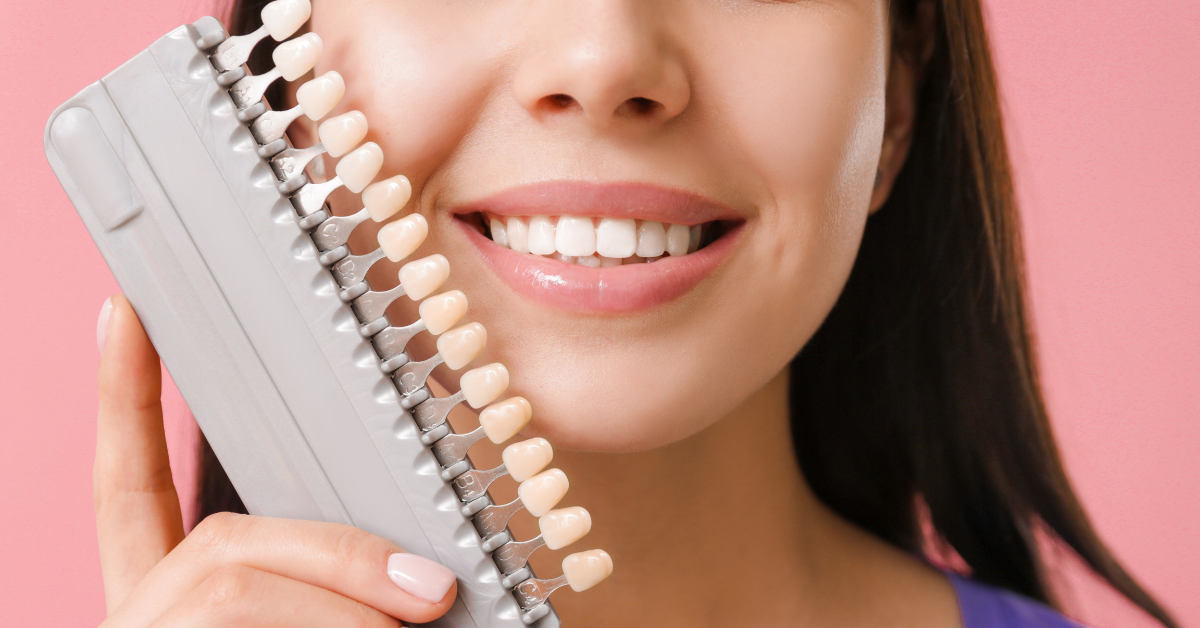
Porcelain veneers are thin, durable, and natural-looking restorations used to enhance the aesthetics and functionality of teeth. Porcelain veneers are preferred to correct color, shape, size, and alignment by being applied to the front surface or the entire tooth.
In which cases are they used?
- Color Disorders: Permanent discoloration that cannot be removed with tooth whitening.
- Shape and Size Disorders: Small or disproportionate teeth.
- Worn Teeth: Teeth that have shrunk due to enamel loss or wear.
- Cracks and Fractures: Strengthening the tooth while preserving its natural structure.
- Closing Gaps (Diastema): Elimination of gaps between teeth.
- Orthodontic Alternative: In mild crowding and alignment problems.
Types of Porcelain Veneers:
Metal-Supported Porcelain Veneers
Metal-supported porcelain veneers are restorations placed on the teeth to provide durability and aesthetics. It is applied in teeth with large material loss and color change due to caries, in teeth broken due to trauma, in tooth deficiencies, in crooked and deformed teeth. Porcelain veneers offer a natural tooth appearance and are long-lasting.
Metal-supported porcelain veneers are especially preferred in the posterior teeth, if they will be supporting teeth in removable prostheses, and in implant-supported restorations. They are more economical. However, in the anterior region, they are less preferred today due to both aesthetic reasons and the possibility of metal reflection along the gum line when gum recession occurs.
Metal-Free (Full) Porcelain Veneers
Full porcelain veneers are an aesthetic dentistry application that covers the entire teeth and gives the closest results to the natural tooth appearance. Since these veneers are made of tooth-colored porcelain material, they provide both a durable and natural appearance. Emax porcelains, Empress veneers, Laminate veneer veneers, and Zirconium tooth veneers can be given as examples in this group.
Metal-free porcelain veneers; are suitable cases for those with stained teeth, those with broken or carious teeth, those with gaps between their teeth, those with worn teeth, and those with shape deformities in their teeth.
Thus, discolorations, shape deformities, and gaps in the teeth are eliminated. Since porcelain is harder than tooth enamel, it is resistant to abrasion. Since it does not contain metal, it is a suitable option for people with metal allergies. It can be used for many years with proper care. However, it is more costly compared to other treatment methods. It is not reversible after application. A certain amount of abrasion of the teeth is required.
E-Max Porcelain Veneers
E-max porcelains are one of the most preferred full porcelain veneer types in dentistry in terms of aesthetics and durability. E-MAX veneers, produced from a special glass ceramic called lithium disilicate, perfectly mimic the brightness and transparency of natural teeth. E-max porcelains have higher aesthetic properties than other porcelains. This is due to the higher glass phase. As the glass phase increases, the light permeability of porcelains increases and a result closer to the appearance of natural teeth is obtained.
E-max porcelains provide a natural and aesthetic appearance, especially in the anterior teeth. They are also extremely durable and long-lasting. Thanks to their high strength properties, they are resistant to breakage and cracking. This makes them an ideal option not only for aesthetic purposes but also for functional restorations.
E-max porcelains are especially preferred as permanent solutions to tooth whitening procedures in patients who have stained teeth, who use a lot of coffee and cigarettes and cannot quit, and who want a white aesthetic appearance at the same time. They are more preferred in congenital tooth deficiencies, diastema (spaced) teeth, anterior teeth with deformed form or congenitally defective enamel.
The prices of E-max porcelains may vary depending on the dentist, the dental technician, the quality of the materials to be used, and the method of manufacture. They are more expensive because laboratory costs are higher.
Advantages of Porcelain Veneers
- Natural Appearance: Porcelain reflects light like a natural tooth, which provides excellent aesthetic results.
- Durability: It lasts for many years with proper care.
- Stain Resistance: The porcelain surface is resistant to substances such as coffee, tea, or cigarettes.
- Biocompatible: It is compatible with the gums and has a low risk of allergy.
- Solution to Various Problems: It can be applied to many aesthetic and functional dental problems.
Disadvantages of Porcelain Veneers:
- High Cost: It is more expensive than composite veneers.
- Permanence: Since the tooth enamel is abraded, there is no turning back.
- Risk of Breakage: It can break when it receives a hard blow (but it is durable).
- Time-Consuming Process: Preparation and application can take a few weeks.
Maintenance and Lifespan
Porcelain veneers usually last for 10-15 years. However, this period can be extended with proper care. Brush your teeth regularly every day and use dental floss. Hard foods should be avoided. Foods such as ice and hard-shelled nuts can crack the porcelain. Visit your dentist regularly to maintain the health of the veneers and gums. Veneers can be protected by using a night guard.