


Fixed Implant-Supported Prostheses
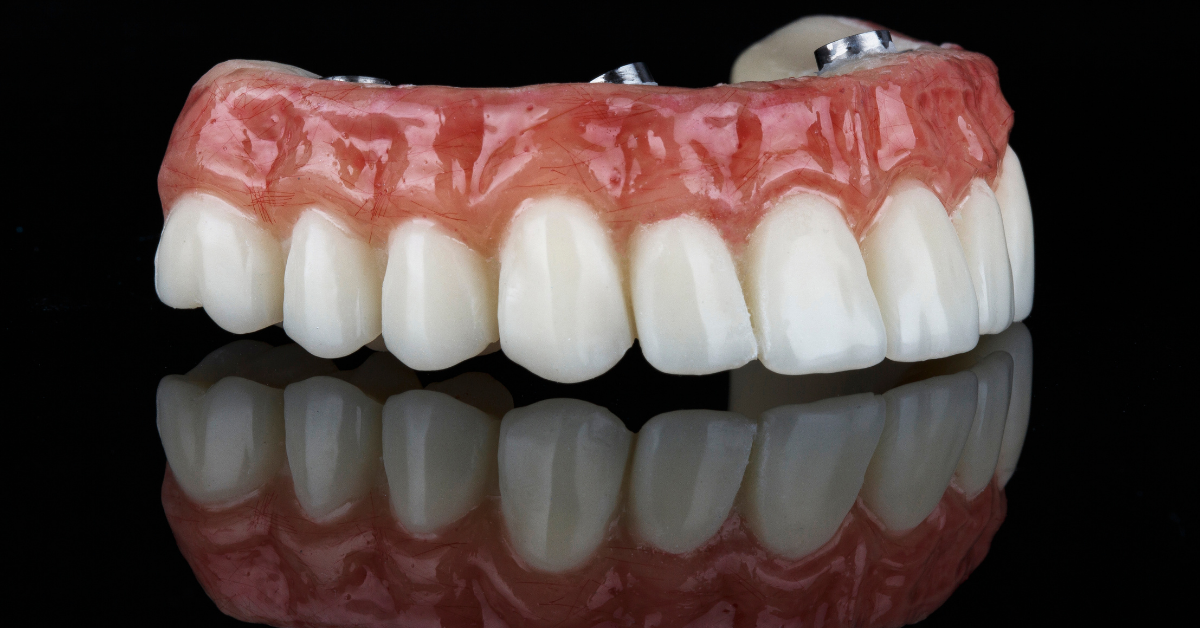
Fixed implant-supported prostheses are one of the most effective and permanent solutions for missing teeth. These prostheses, which are specially designed on titanium implants placed in the jawbone, function like your natural teeth and allow you to have an aesthetic smile. Since they are fixed, they cannot be removed by patients and give the feeling of natural teeth. They offer the closest solution to natural teeth in terms of aesthetics, durability, function, and comfort. They can be used comfortably for many years with proper planning and regular maintenance. It prevents the jawbone from melting and restores chewing functions.
Implant-supported fixed prostheses are selected according to the patient’s needs, aesthetic expectations, and economic situation. Since each method has its own advantages and disadvantages, a detailed examination and treatment planning is essential. When determining the most appropriate treatment option, the dentist pays attention to bone condition, chewing force, and the patient’s oral hygiene.
Who is it suitable for?
- Individuals with missing teeth.
- Patients with sufficient jawbone density.
- Individuals with good general health and who can tolerate surgical procedures.
Unsuitable situations
- Those with uncontrolled diabetes.
- Those with high smoking use (may reduce implant success).
- Those with bone deficiency (bone graft support may be required).
Types of Implant-Supported Fixed Prostheses
Single tooth implants
It is applied in the absence of a single tooth. Implants are artificial tooth roots placed in the jawbone. Fixed prostheses are placed on these implants to complete the missing teeth. No action is required on other adjacent teeth. The implant is placed in place of the missing tooth, and a crown made of porcelain or zirconium is placed on it.
Prostheses on multiple implants
It is applied in the absence of more than one tooth. Implants are placed at both ends of the missing teeth, and the gaps between them are closed with a bridge prosthesis supported by implants.
Full arch prostheses
It is applied in completely edentulous mouths. It is designed to replace all teeth in a jaw and is fixed to the implants. All-on-four and all-on-six systems are in this group. It is preferred in cases where all teeth in the upper or lower jaw are missing. Generally, the entire jaw prosthesis is placed on 4 or 6 implants.
Hybrid prostheses
It is applied to patients with complete toothlessness. Hybrid prostheses are solutions that combine the aesthetic and functional properties of fixed prostheses with the cleanability of removable prostheses. It has a metal infrastructure and is prepared using acrylic or porcelain materials that look like teeth and gums. It can be applied in completely edentulous patients, in cases with severe jaw bone resorption, and in advanced cases requiring prosthetic rehabilitation.
Advantages of Fixed Implant-Supported Prostheses
- Provides a compatible appearance with your other teeth.
- It is as resistant to chewing and biting forces as natural teeth.
- You can use it comfortably like your own teeth.
- Implants prevent melting by stimulating the jawbone.
- There is no need to cut adjacent natural teeth.
- It can be used for a lifetime with proper care.
On the other hand; it is more expensive than traditional prostheses. It takes time for the implant to fuse with the bone. It may contain risks such as infection, implant loss, or healing problems. Here, the patient’s systemic discomfort, smoking factor, and not paying attention to oral hygiene after implant surgery and after the crowns are fixed to the mouth are important factors that can cause implant loss.
Application Process of Fixed Implant-Supported Prostheses
- Your dentist will thoroughly evaluate your oral structure and create your treatment plan.
- Titanium implants are placed in the jawbone.
- A certain period of time is waited for the implants to fuse with the bone.
- Healing caps are attached.
- The gum is shaped and prepared for prosthesis placement.
- Precise measurements are taken and sent to the laboratory for prosthesis preparation.
- A temporary prosthesis is placed on the implant, and aesthetic harmony is evaluated.
- After the healing process, prostheses are fixed on the implants.
Types of Materials Used
Porcelain Fused to Metal (PFM)
It is durable and long-lasting. Its light transmittance is low due to its metal infrastructure, so it is preferred in posterior teeth.
All-Ceramic Prostheses
It gives the best aesthetic results. It is especially used in anterior teeth.
Zirconium Prostheses
It is durable and has high light transmittance. Since it does not contain metal, it is biocompatible and aesthetically natural.
Care of Fixed Implant-Supported Prostheses
- Brush your teeth at least twice a day.
- Use dental floss for interdental cleaning. It is used for cleaning between implants.
- Also, mouthwashes help clean plaque and food residues.
- You should regularly visit your dentist for checkups every 6 months.
Manufacturing Technique Classification
Cemented Implant-Supported Crowns
Cemented implant-supported crowns are fixed on the implant by the dentist with a special adhesive (cement). These prostheses give the closest results to the appearance of natural teeth. It is applied in single tooth deficiencies, multiple tooth deficiencies, and situations requiring aesthetic and functional restoration. While sometimes a screw hole may be visible in screw-retained prostheses, this problem does not exist in cemented prostheses. It provides good marginal fit and reduces the risk of leakage. It is easier to install and align. On the other hand, if any repair is needed, the prosthesis may not be removed without breaking. If the cement is not completely cleaned, the risk of infection (peri-implantitis) may occur. The difficulty of removing the prosthesis makes maintenance and revision procedures complicated. In general, zirconium substructure supported porcelain or monolithic (single layer) zirconium crowns are preferred in implant-supported crowns due to their higher aesthetics.
Screw-Retained Implant-Supported Crowns
Screw-retained implant-supported crowns are prostheses that are attached to the abutment (connecting part) placed directly on the implant with a screw. It can be applied in single tooth deficiencies, multiple tooth deficiencies, and complete edentulism. Especially in cases where the crown length needs to be short (if the distance to the opposing arch is very small), screw-retained restorations are applied when there is not enough bone support in the posterior and advanced surgery such as sinus lift is contraindicated to extend the dental arch further back. In short, when there is not enough bone for implants, if they have to be placed at an angle, parallelism is provided in the superstructure with multi abutments.
Advantages
- The prosthesis can be easily removed when maintenance, repair, or revision is required.
- Since no adhesive is used, there is no risk of cement-related peri-implantitis.
- The placement angle of the prosthesis can be changed if necessary.
Disadvantages
- These systems require a little more careful and sensitive work.
- The screw hole may sometimes negatively affect the aesthetics (in the anterior region).
- Screws may loosen or break.
- It is generally more expensive than cemented prostheses.
Classification of Screw-Retained Crowns
- In single tooth deficiency: Single tooth implant-supported crown on T-base
- In multiple tooth deficiency: Bridge-shaped screw-retained crowns made on multi abutment
- In full arch edentulism: These systems are full arch prostheses that are fixed on 4 or 6 implants per jaw in completely edentulous patients. Implants are placed at certain angles to provide maximum support and stability with fewer implants. Systems such as All-on-four, All-on-six and Hybrid prostheses. A temporary prosthesis can be placed on the same day (immediate loading). It can be applied even in cases where the amount of bone is insufficient with angled implant placement. It is more economical compared to placing a separate implant for each tooth. On the other hand, cleaning and hygiene must be well maintained. Bone resorption may be seen in the long term. In case of implant loss, the prosthesis may have to be redesigned.
All-on-Four
4 implants are placed in the upper or lower jaw. Posterior implants are placed at an angle to get support from the strongest areas of the bone. It usually provides a faster healing process. If the patient’s bone quality is good and sufficient, and if the primary stabilities of the implants are sufficient, a temporary prosthesis is placed on the same day, and the patient is not left without teeth aesthetically and functionally. This is a great comfort for the patient. On the other hand, since the loss of an implant in the later process will disrupt the entire system, patients need to pay close attention to their oral care.
All-on-Six
6 implants are placed in the upper or lower jaw. Since it provides more implant support, it is more resistant to chewing force. It is preferred in patients with excessive bone loss. Although it is more expensive than the All-on-four system, the continuity of the system is longer. If the bone condition is suitable and there is no economic problem, treatment should continue with six implants.
Hybrid Prostheses
Hybrid prostheses are solutions that combine the aesthetic and functional properties of fixed prostheses with the cleanability of removable prostheses. It has a metal infrastructure and is prepared using acrylic or porcelain materials that look like teeth and gums. It can be applied in completely edentulous patients, in cases with severe jaw bone, in advanced cases requiring prosthetic rehabilitation.
Advantages of Hybrid Prostheses
- Long-lasting due to its metal-supported structure.
- Naturally mimics the appearance of gums and teeth.
- Easy to remove, making repair procedures practical.
- Lower cost compared to fixed prostheses.
Disadvantages of Hybrid Prostheses
- Heavier due to the metal substructure.
- Risk of infection increases if plaque and food residues accumulated beneath it are not cleaned.
- While porcelain superstructures provide better aesthetic results, acrylic-based designs are somewhat limited.
In Summary
Fixed implant-supported prostheses offer a reliable, aesthetic, and functional solution for missing teeth. With various types available, they can be tailored to individual needs and circumstances. However, they require careful planning, execution, and maintenance to ensure long-term success and patient satisfaction. It’s crucial to consult with a qualified dental professional to determine the most suitable approach for your specific situation.