


Can You Get Dental Implants With Bone Loss?
Can you get dental implants with bone loss is a question almost every patient asks once several years have passed since losing a tooth. The short answer is that in most cases you can, but the route is not the same for everyone. Planning an implant in a jaw with reduced bone volume depends on how much bone is missing and where, on the patient’s general health and on the time available for treatment. In this article we explain how bone loss affects implants, which solutions come into play and how the decision is reached.
Why the Jawbone Resorbs
Jawbone is maintained by the chewing forces passing through it. Once a tooth is removed, that stimulus stops and the bone in the area begins to lose volume. The loss is fastest in the first months, then slows down without ever fully stopping. This is why the same gap can present a completely different picture five years later.
The main factors that accelerate resorption are these:
- Gaps left empty for a long time: Bone that receives no load loses both height and width over the years.
- Advanced gum disease: Periodontitis destroys the bone that holds the teeth and usually affects more than one region.
- Ill fitting removable dentures: Pressure that is not distributed evenly can speed up localised resorption.
- Trauma and difficult extractions: Damage to the bony wall during removal determines the volume that remains.
- Systemic factors: Uncontrolled diabetes, smoking and certain drugs affecting bone metabolism all worsen the picture.
Resorption matters beyond implants. As bone height reduces, the lower third of the face can shorten, existing dentures stop seating properly and the support around neighbouring teeth weakens.
How Bone Loss Affects an Implant
A dental implant is a titanium body placed in the jawbone that takes over the role of a tooth root. To integrate, it needs sound tissue of sufficient height and thickness around it. When volume is reduced, three separate problems appear: there is less room for the implant, mechanical stability in the early phase is weaker, and the distance to nearby anatomical structures shortens.
Those structures are the nerve canal in the lower jaw and the sinus cavity in the upper jaw. A large part of the planning work goes into keeping the implant at a safe distance from them. The question is therefore not whether there is bone, but how much bone there is, in which region and of what quality.
Insufficient bone does not mean treatment is impossible. When we assess who can have implant treatment, bone volume alone is no longer decisive, because several approaches either add volume or make better use of what is already there.
Approaches That Add Bone Volume
Bone grafting
Grafting means adding bone or a bone substitute material to a deficient site so that a foundation for the implant is created. The material can come from the patient’s own bone or from prepared sources. If the defect is small, the graft can be placed at the same appointment as the implant. Where the loss is wider, grafting comes first and the tissue is left to mature.
The waiting period depends on the size of the defect and on the material used. Fixed timetables promised in advance deserve caution, because maturation is a biological process and it varies from patient to patient.
Sinus floor elevation
In the posterior upper jaw the sinus cavity expands downwards after tooth loss, and the height available for an implant drops. A sinus lifting procedure works by carefully raising the sinus membrane and placing graft material into the space created. Where the remaining bone height is above a certain level, the procedure can be combined with implant placement in one session.
Soft tissue support
It is discussed less often than bone, but the thickness of the attached gum band around an implant influences the long term outcome. Thin and mobile tissue makes cleaning harder and sets the stage for later problems. Where needed, soft tissue is reinforced alongside the bone procedure.
Approaches That Use the Existing Bone Better
Not every case requires bone to be added. Some designs simply make smarter use of what is there:
- Angled placement: Implants are positioned at specific angles into the densest available bone, which can reduce or remove the need for grafting. The All-on-Four implant system and the All-on-Six implant system are built on this principle.
- Short implants: Where height is limited, shorter bodies can be selected. With the right indication they are a dependable option.
- Narrow diameter implants: On a reduced bony ridge these can help avoid additional surgery.
- Changing the number and spread of implants: Sometimes the answer is not more implants but a better distribution across the sound areas that remain.
All of these share the same aim, which is to shorten treatment and narrow the surgical scope. Which one applies cannot be stated without three dimensional imaging.
How the Plan Is Built
Planning in cases with bone loss is more detailed than a routine implant plan. We work through the following in order:
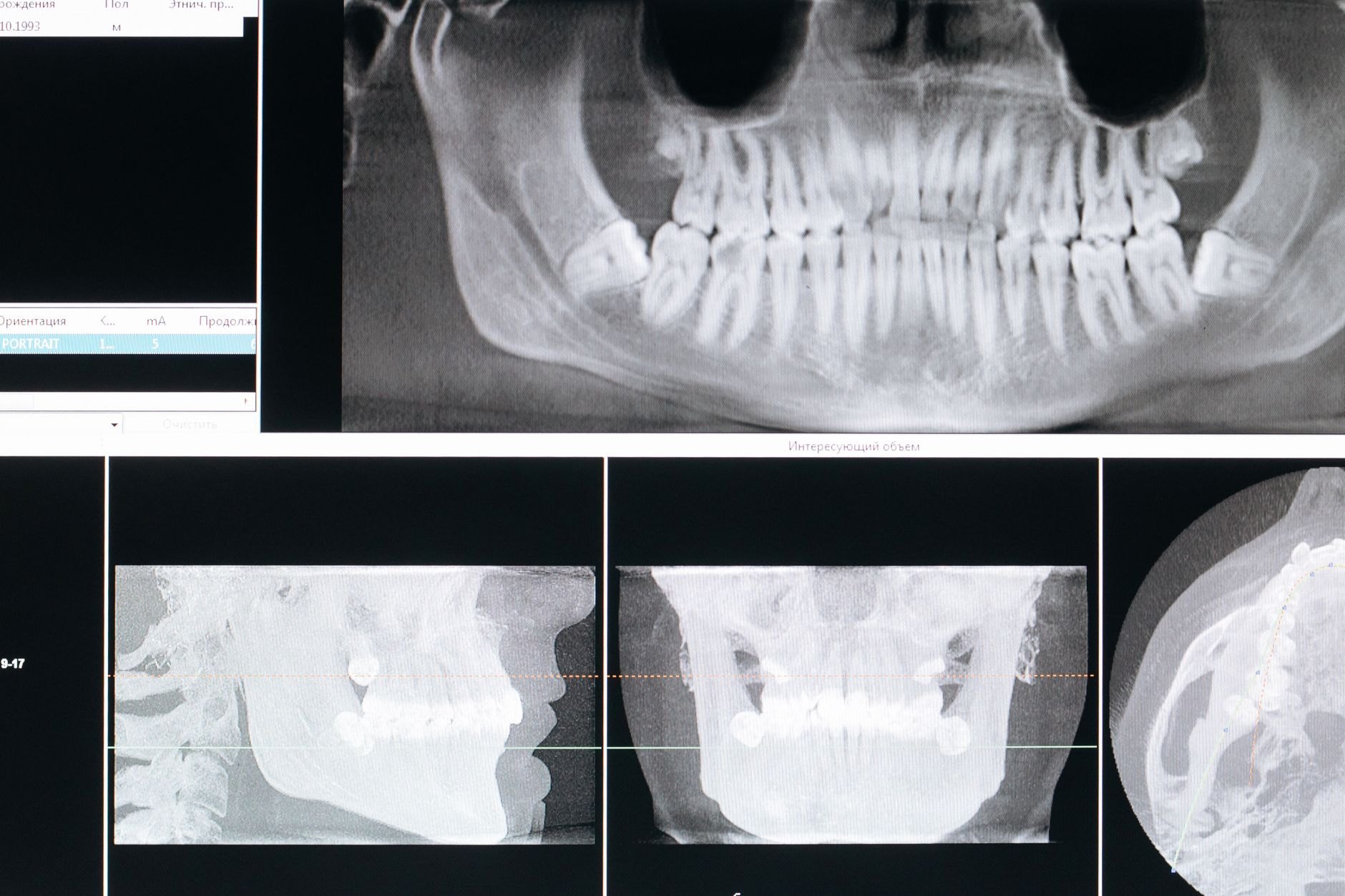
- Three dimensional imaging: Bone height, width and density are measured, and the position of the sinus and the nerve is identified.
- Gum health: If inflammation is active, the implant plan waits and that condition is treated first.
- General health and medication: Blood sugar control, drugs affecting bone metabolism and blood thinners change the process directly.
- Smoking: This is the most significant modifiable factor for graft success and for healing around the implant.
- The prosthetic goal: What is planned on top, fixed or removable, determines where the implant has to sit from the very beginning.
Digital planning software allows the position and angle of the implant to be defined before surgery. Where bone is limited, this is the most practical way to keep a safe margin. The page explaining how implant application is performed is a good starting point for anyone who wants to see the overall sequence.
How We Handle These Cases at Our Clinic
At our clinic in Alanya the first step in any case with bone loss is measurement. A panoramic image on its own is not enough, so we take a three dimensional scan and assess the bone at the exact point where the implant would sit. We then define the prosthetic goal, because you cannot decide where an implant goes without knowing what will be built on it.
Where gum disease is present we split the plan in two. Inflammation is brought under control first, and the surgical stage is planned once the tissues have settled. Plans that reverse this order do not last. The surgical stage runs under dental implant surgery, and if a graft is required we discuss it openly with the patient at the start rather than partway through.
For patients travelling from abroad we set the calendar out in advance. Where treatment is staged, we agree which procedure happens at which visit and which reviews will be needed after the patient goes home. If time is short we prefer to split the treatment rather than force a compressed plan.
What Slows Bone Loss Down
The most effective measure is not leaving a gap empty for years. When a space is restored early the bone keeps receiving stimulus and the loss stays largely contained. Detecting gum disease early matters just as much, because periodontitis progresses quietly and can affect a wide area over time.
Regular check-ups, professional cleaning and sound home care underpin both of these. For patients who already wear a removable denture, having the fit checked at intervals reduces the resorption caused by uneven local pressure.
Care After the Implant Is Placed
In patients who needed additional procedures because of bone loss, maintenance carries even more weight. Plaque accumulating around an implant first inflames the gum and can then develop into peri-implantitis, which involves the bone. Noticed late, this can undo the volume that was gained.
Regular reviews, interdental cleaning and professional sessions where indicated reduce that risk considerably. The review interval is not the same for every patient. Where a graft was placed and risk factors are present, appointments are scheduled more frequently.
Conclusion
Bone loss is, in most cases, an obstacle that implant treatment can work around. When the approaches that add volume and the designs that use existing bone more efficiently are considered together, a realistic plan can be built even for patients who have been without teeth for years. What matters is that the decision rests on measurement rather than on assumption. At Ayşe Erken Dental Clinic we assess the bone three dimensionally first, restore gum health and then plan according to the prosthetic goal. If you have been told that bone loss rules out implants, you can get in touch with us to arrange an individual assessment.